
 +1 (201) 366-6420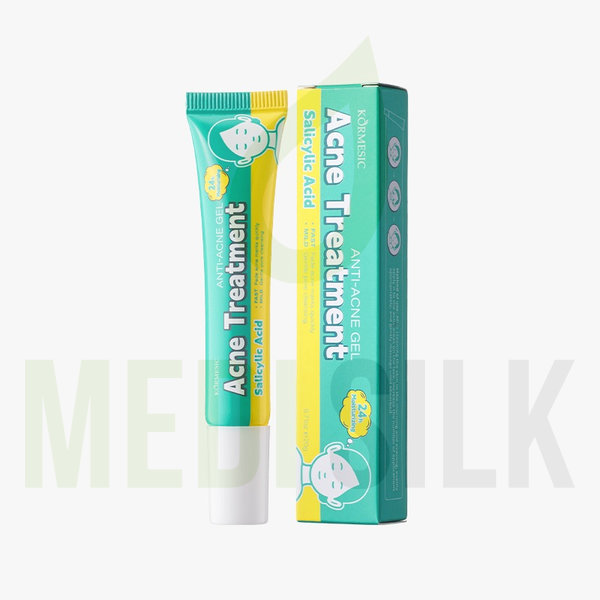
Description
General Product Properties
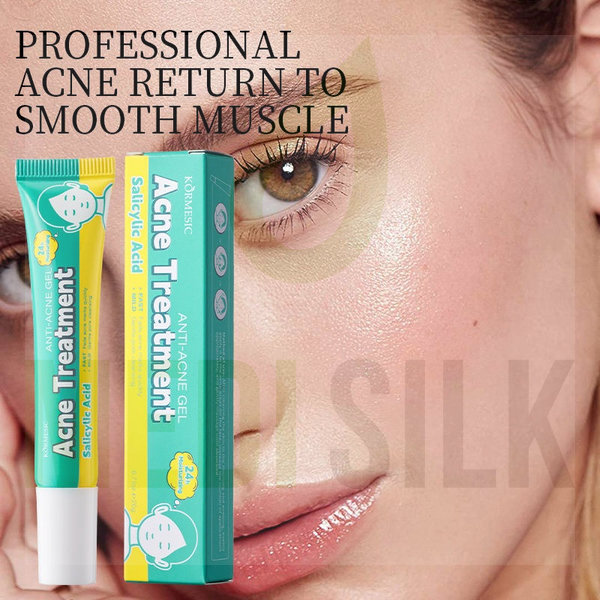
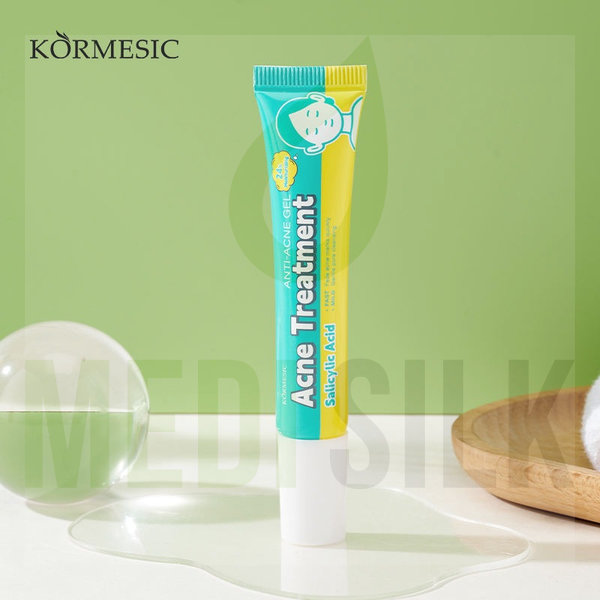
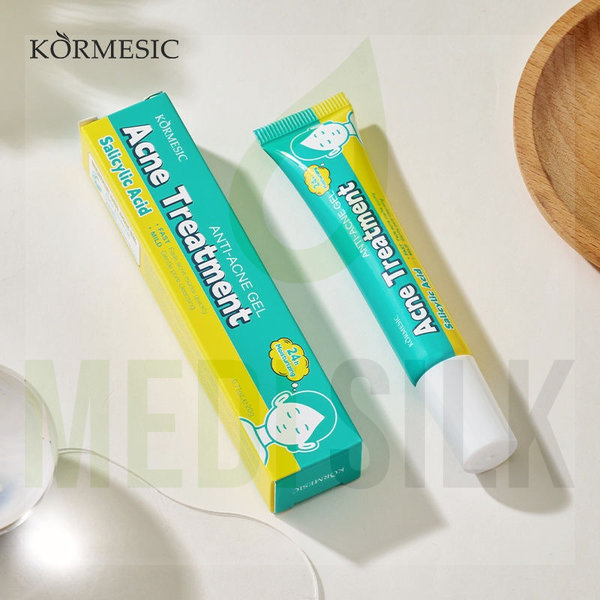
The Kormesic Salicylic Acid Anti-Acne Gel is a water-based, lightweight gel treatment designed to address all stages of the acne lifecycle — from comedones (clogged pores) and papules to pustules and post-acne marks. The standout ingredient is Salicylic Acid, a beta-hydroxy acid (BHA) that is oil-soluble — a property that distinguishes it from alpha-hydroxy acids (AHAs) like glycolic acid, which are water-soluble. This oil solubility allows salicylic acid to penetrate deep into the lipid-rich environment of the pores, where acne begins.
Salicylic acid works through multiple mechanisms:
- Comedolytic Action: It dissolves the desmosomes (intercellular “glue”) that hold dead skin cells together within the pore, preventing the formation of microcomedones — the earliest precursor to all acne lesions
- Keratinolytic Effect: It breaks down the keratin protein buildup that traps sebum and dead cells inside the follicle
- Sebum Regulation: It penetrates the sebaceous gland and helps normalize sebum production, reducing the oily environment that acne bacteria thrive in
- Anti-Inflammatory Activity: Salicylic acid has direct anti-inflammatory properties through inhibition of cyclooxygenase (COX) enzymes and prostaglandin synthesis, reducing the redness and swelling associated with inflammatory acne
- Antimicrobial Action: While not a direct antibiotic, salicylic acid creates an unfavorable environment for Cutibacterium acnes (formerly Propionibacterium acnes) by reducing the clogged, anaerobic conditions within the pore where the bacteria proliferate
The gel formulation is particularly advantageous for acne-prone skin. Unlike cream-based treatments that can feel heavy or occlusive (and potentially clog pores further), the gel format is oil-free, non-comedogenic, and delivers the active ingredients in a lightweight, rapidly absorbing vehicle. The gel base typically consists of purified water, humectants (glycerin, propylene glycol or butylene glycol), film-forming polymers (carbomer, hydroxyethylcellulose), and pH-adjusting agents to maintain the optimal acidic environment for salicylic acid activity (pH 3.0–4.5, where salicylic acid is most stable and effective).
Beyond salicylic acid, the Kormesic formulation incorporates a supporting complex of acne-fighting and skin-soothing ingredients:
- Niacinamide (Vitamin B3): Reduces sebum production, strengthens the skin barrier, soothes inflammation, and helps fade post-inflammatory hyperpigmentation (PIH) — the dark marks left after acne lesions heal
- Zinc PCA: A zinc complex with antimicrobial and sebum-regulating properties that helps control the bacteria associated with acne and reduces oiliness
- Centella Asiatica Extract (Cica/Centella): Rich in madecassoside, asiaticoside, and asiatic acid — compounds that accelerate wound healing, reduce inflammation, and support the repair of acne-damaged skin
- Panthenol (Provitamin B5): Moisturizes and supports skin barrier repair, counteracting any potential dryness from salicylic acid
- Allantoin: A soothing, skin-repairing agent that calms irritation and supports the healing of active acne lesions
- Tea Tree Oil (Melaleuca Alternifolia), in controlled low concentrations: A natural antimicrobial and anti-inflammatory that works synergistically with salicylic acid against C. acnes bacteria
- Aloe Barbadensis Leaf Juice: Provides cooling, soothing hydration and anti-inflammatory support
- Hyaluronic Acid: Delivers lightweight hydration to prevent the dehydration that can occur with salicylic acid use
- Green Tea Extract (EGCG): A potent antioxidant that reduces inflammation and protects the skin from oxidative stress
The gel has a transparent or translucent appearance, a smooth, silky texture that spreads easily, and dries down to an invisible, non-sticky finish — making it suitable for wear under makeup or sunscreen. It is formulated without denatured alcohol, which can strip the skin’s barrier and worsen acne in the long run, and without artificial fragrances, essential oils (beyond low-dose tea tree), parabens, sulfates, or phthalates.
Detailed Benefits
Deep Unclogging of Pores at the Source – The most fundamental benefit of this gel is its ability to reach inside the pore — where acne actually begins — and dissolve the mixture of dead skin cells and excess sebum that forms the comedonal plug (the “clog”). Because salicylic acid is lipid-soluble (it dissolves in oil, not just water), it can traverse the sebum-filled follicle and work from within. This is in contrast to water-soluble exfoliants (glycolic acid, lactic acid) that primarily work on the skin surface and cannot penetrate deeply into the pore. The result is a progressive clearing of blackheads (open comedones), whiteheads (closed comedones), and a reduction in the formation of new comedones. With consistent use over 2–4 weeks, users typically notice that their pores appear smaller and less congested — not because the pores physically shrink, but because they are no longer stretched open by accumulated debris.
Reduction of Active Inflammatory Acne – For papules (red, tender bumps) and pustules (pus-filled lesions), the gel provides a multi-pronged attack. The salicylic acid reduces the inflammation that causes the redness and swelling through its COX inhibition. The zinc PCA provides additional antimicrobial and anti-inflammatory action. The centella asiatica and allantoin calm the surrounding irritated tissue. The tea tree oil contributes a natural antimicrobial effect against C. acnes. This combination means that existing pimples heal faster — typically 1–3 days faster than untreated lesions — and are less red and painful while healing. The gel is particularly effective at drying out pustules and reducing their size and redness within 12–24 hours of application.
Prevention of Future Breakouts – Acne is a chronic condition, not a one-time event. A key benefit of the gel is its ability to prevent the formation of new lesions by keeping pores clear on a continuous basis. The regular exfoliation of the pore lining prevents the buildup of dead skin cells that would otherwise combine with sebum to form new comedones. The sebum-regulating effects of salicylic acid and niacinamide gradually reduce the amount of oil reaching the skin surface, making the environment less hospitable to C. acnes colonization. Over 4–8 weeks of consistent use, most users experience a significant reduction in the frequency and severity of breakouts — fewer pimples appearing, and those that do appear are smaller, less inflamed, and heal faster.
Gentle Exfoliation Without Physical Abrasion – Unlike harsh physical scrubs (which can cause micro-tears in the skin and spread acne-causing bacteria across the face), the salicylic acid gel provides a chemical exfoliation that is uniform, controlled, and non-traumatic. The gel’s pH-optimized formulation ensures that the exfoliation is gentle enough for daily or twice-daily use on most acne-prone skin types, without the redness, peeling, or irritation associated with higher concentrations of salicylic acid or physical exfoliation methods. The keratolytic action is progressive and gentle — you won’t see visible peeling (as with some AHA treatments), but you will notice that your skin texture becomes increasingly smooth, refined, and even over time.
Fading of Post-Inflammatory Hyperpigmentation (PIH) – One of the most distressing after-effects of acne — particularly for individuals with darker skin tones — is the dark marks (post-inflammatory hyperpigmentation) left behind after a pimple heals. These marks can persist for months if untreated. The niacinamide in the formulation directly inhibits melanosome transfer from melanocytes to keratinocytes, gradually lightening these dark marks. Salicylic acid’s gentle exfoliation also accelerates the turnover of pigmented skin cells, helping the marks fade more quickly. The green tea extract provides antioxidant protection that prevents further pigmentation from UV exposure (which can darken existing marks). Users typically notice a visible lightening of post-acne marks within 4–8 weeks of consistent use.
Oil Control Without Over-Drying – Many acne treatments (particularly benzoyl peroxide and high-concentration salicylic acid formulations in alcohol-based vehicles) leave the skin feeling tight, dry, and stripped — which paradoxically can lead to rebound oil production as the skin tries to compensate for lost moisture. The Kormesic gel is formulated to avoid this by including hydrating humectants (glycerin, hyaluronic acid, aloe vera) and barrier-supporting ingredients (panthenol, niacinamide). The gel provides effective sebum control — reducing the visible shine and oiliness on the skin surface — without triggering the dryness- irritation-rebound oil cycle. The skin feels balanced: less oily, but not dry or tight.
Soothing and Calming of Irritated Skin – The inclusion of centella asiatica, allantoin, aloe vera, and panthenol provides active soothing for acne-prone skin, which is often red, sensitive, and inflamed even in areas without active lesions. These ingredients reduce the background inflammation that contributes to the redness of acne-prone skin, making the complexion appear calmer, more even-toned, and less reactive. For users whose acne is exacerbated by stress or sensitivity (acne excoriée or stress acne), the calming effects can be particularly beneficial in breaking the cycle of inflammation and breakouts.
Non-Comedogenic and Suitable for Sensitive Acne-Prone Skin – The entire formulation has been designed to be non-comedogenic (will not clog pores), non-acnegenic (will not cause acne), and non-irritating (suitable for sensitive skin). It is free from known acne-triggering ingredients such as denatured alcohol, coconut-derived oils that are high in comedogenic fatty acids, artificial fragrances (which can irritate acne-prone skin), and lanolin. Each ingredient has been selected for its compatibility with oily, congested, and reactive skin. Even the tea tree oil — which can be irritating at high concentrations — is used at a controlled level that provides antimicrobial benefit without causing contact irritation.
Versatility — Spot Treatment or All-Over Use – The gel is formulated with a concentration of salicylic acid (typically 1–2%) that is safe and effective for both targeted spot treatment and all-over application. As a spot treatment, it can be applied directly to individual pimples 1–3 times per day to dry them out and reduce inflammation. As an all-over treatment, it can be applied to the entire face (or affected areas like the chin, jawline, T-zone, or back) to provide comprehensive acne prevention and ongoing pore maintenance. This versatility makes it suitable for different phases of acne management — intensive during active breakouts, and maintenance during clearer periods.
Safe for Long-Term Daily Use – Unlike antibiotics (topical or oral), which can lead to bacterial resistance and are typically used in short courses, or isotretinoin, which has significant side effects and is used in defined courses, salicylic acid is safe for continuous long-term use. The formulation does not induce bacterial resistance, does not cause photosensitivity (though sunscreen is always recommended), and does not build tolerance. The skin maintains its responsiveness to the treatment over years of use, making it an ideal cornerstone of a long-term acne management strategy.
Potential Method of Application
- Cleansing: Start with a clean face. Wash with a gentle, non-stripping cleanser appropriate for acne-prone skin (avoid harsh sulfate-based cleansers that can disrupt the barrier). Pat the skin dry with a clean, soft towel — do not rub. The skin should be completely clean and free of makeup, sunscreen, and excess oil before the gel is applied.
- Skin Preparation (pH Consideration) : Salicylic acid works most effectively at a pH of 3.0–4.5. After cleansing, the skin’s pH may be temporarily elevated (especially if a non-acidic cleanser was used). For optimal efficacy, wait 1–2 minutes after cleansing before applying the gel to allow the skin to return to its natural slightly acidic pH. Alternatively, using a pH-balancing toner before the gel can enhance salicylic acid’s efficacy.
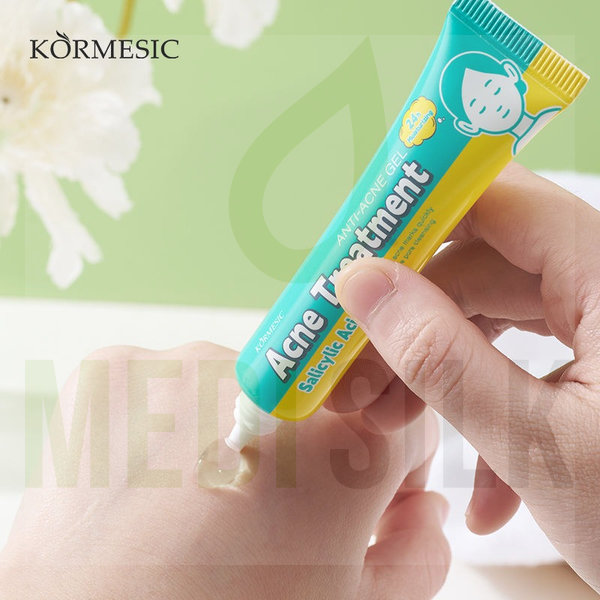
- Dispensing: Squeeze a small amount of the gel onto clean fingertips. For all-over face application, use an amount approximately the size of a pea (about 0.5 mL). For spot treatment, use a very small amount — just enough to cover the individual pimple in a thin, transparent layer. The gel is concentrated, and a little goes a long way.
- Application — All-Over Treatment:
- Dot the gel across the forehead, cheeks, nose, chin, and jawline
- Using clean fingertips, spread the gel in a thin, even layer across the entire face, avoiding the immediate eye area (salicylic acid can cause irritation if it gets into the eyes)
- Extend the application down the neck and onto the décolletage if these areas are also prone to breakouts
- The gel should be spread so thinly that it is barely visible — a thick layer does not increase efficacy and may increase the risk of irritation
- The gel will dry down to a nearly invisible, non-sticky finish within 60–90 seconds
- Application — Spot Treatment:
- For individual pimples (papules, pustules, or emerging blind pimples), apply a tiny amount of gel directly onto the lesion
- Use a clean fingertip or a cotton swab to apply precisely — avoid spreading the gel onto the surrounding healthy skin
- Do not rub or massage the spot — gentle patting is sufficient
- The gel will form a thin, transparent film over the pimple that stays in place and delivers continuous treatment
- Application — Targeted Area Treatment:
- For areas of persistent congestion (nose for blackheads, chin for hormonal breakouts, T-zone), apply a slightly more generous amount to these areas
- Gently massage into the area using small circular motions for 15–30 seconds to work the gel into the pores
- Leave the gel in place without rinsing
- Frequency of Use:
- Starting phase (first 1–2 weeks) : Use once daily, preferably in the evening. This allows the skin to build tolerance to the exfoliating effects of salicylic acid.
- Establishment phase (weeks 2–4) : If no significant irritation (redness, peeling, stinging) occurs, increase to twice daily (morning and evening).
- Maintenance phase (week 4+) : Continue twice daily use, or adjust to once daily if your skin responds well to once-daily treatment.
- For sensitive skin : Start with every-other-day application and gradually increase to daily use as tolerance builds.
- For spot treatment only : Apply up to 3 times per day directly to individual pimples, even if you are not using the all-over treatment.
- Contact Time:
- The gel is a leave-on treatment — do not rinse off
- The gel should remain on the skin for at least 4–6 hours for effective treatment
- For morning use, apply the gel, allow it to dry completely (2–3 minutes), then proceed with sunscreen and/or makeup
- For evening use, apply the gel as the last step before moisturizer or as the only step (depending on your routine) — the gel will work throughout the night
- Layering with Other Products:
- After cleansing, before moisturizer: In a typical routine, apply the gel to clean, dry skin. Wait 2–3 minutes for it to absorb, then apply moisturizer. This order ensures the salicylic acid can penetrate without being blocked by heavier products.
- With other active ingredients (retinol, AHAs, benzoyl peroxide) : Do NOT use the salicylic acid gel simultaneously with other exfoliating acids or retinoids in the same routine. Alternate:
- Morning: Salicylic acid gel
- Evening: Retinol or AHA treatment
- Or alternate days (salicylic acid one day, retinol the next)
- With benzoyl peroxide: If using both, apply them at separate times of day (e.g., salicylic acid gel in the morning, benzoyl peroxide in the evening) to avoid cumulative irritation
- With vitamin C: Apply vitamin C serum first, wait 5–10 minutes (vitamin C works best at a lower pH), then apply the salicylic acid gel
- With niacinamide: These ingredients are generally compatible and can be used in the same routine. Apply the lighter consistency product first.
- Moisturizer is Essential: Despite the gel’s hydrating ingredients, salicylic acid can be drying — particularly during the first 2–3 weeks of use. Always follow with an appropriate moisturizer for your skin type. For oily/acne-prone skin, choose a lightweight, oil-free, non-comedogenic gel or lotion moisturizer. For dry or combination skin, a slightly richer but still non-comedogenic moisturizer is appropriate. Moisturizing after the gel is not optional — it is essential for maintaining barrier health and preventing the irritation that can worsen acne.
- Sunscreen is Non-Negotiable: Salicylic acid exfoliates the stratum corneum, and any exfoliation can increase the skin’s sensitivity to UV radiation. Daily use of a broad-spectrum sunscreen (SPF 30–50, PA+++) is mandatory — even on cloudy days and during winter months. The salicylic acid gel combined with unprotected sun exposure can lead to sunburn, hyperpigmentation, and increased photoaging. For acne-prone skin, choose a sunscreen that is oil-free, non-comedogenic, and preferably mineral-based (zinc oxide or titanium dioxide) if chemical sunscreens cause irritation.
- Duration of Treatment:
- Immediate (day 1–3) : Active pimples may start to dry out and shrink. Some users may experience a mild initial “purging” as the salicylic acid accelerates the turnover of existing microcomedones — this is normal and temporary, typically lasting 2–4 weeks.
- Short-term (weeks 2–4) : Noticeable improvement in skin texture — smoother, less congested. Blackheads appear smaller. Active breakouts are fewer and heal faster.
- Medium-term (weeks 4–8) : Significant reduction in overall acne lesions. Post-inflammatory hyperpigmentation begins to fade. Skin appears clearer and more even-toned.
- Long-term (weeks 8–12+) : Maximum results — clear or near-clear skin with well-controlled oiliness, minimal clogged pores, and rare breakouts. Results are maintained with continued use.
- Ongoing: Continue daily use to maintain results. Acne is a chronic condition, and discontinuation of treatment will result in a gradual return of breakouts (typically within 2–4 weeks of stopping).
- What to Expect During the Purging Phase: Some users may experience an initial “purge” — the appearance of more pimples than usual during the first 2–4 weeks of use. This is not the gel causing new breakouts; rather, it is accelerating the life cycle of microcomedones (clogged pores that were already forming beneath the skin surface) so that they come to a head and heal faster. Purging is characterized by small, superficial whiteheads in areas where you typically break out. It is distinct from an allergic reaction or irritation (which would cause red, itchy, or painful bumps in areas where you don’t normally break out). The purge is temporary and will resolve as the skin clears.
- Precautions:
- For external use only. Avoid contact with the eyes, lips, nostrils, and mucous membranes. If contact occurs, rinse immediately with cool, clean water.
- Do not apply to broken, sunburned, or otherwise compromised skin.
- Perform a patch test on a small area of skin (behind the ear, on the inner arm, or on a small area of the jawline) 24–48 hours before first use to check for individual sensitivity.
- Discontinue use if persistent redness, stinging, burning, peeling, or contact dermatitis occurs. While some mild tingling upon application is normal (particularly on skin with active acne lesions), persistent or worsening irritation indicates that the product should be used less frequently or discontinued.
- If you are pregnant or breastfeeding, consult your healthcare provider before using salicylic acid products, particularly over large areas of the body. Topical salicylic acid at 1–2% is generally considered safe during pregnancy when used in small amounts (FDA Pregnancy Category C — consultation recommended).
- Do not use in combination with other exfoliating products (other salicylic acid products, glycolic acid, lactic acid, retinol/retinoids, physical scrubs, cleansing brushes with exfoliating attachments) until your skin has fully adjusted to the gel — typically 4–6 weeks.
- If you have a salicylate allergy (allergy to aspirin or NSAIDs), do not use this product. Consult your healthcare provider.
- Do not use on children under 2 years of age without medical supervision.
- Store in a cool, dry place (below 25°C / 77°F), away from direct sunlight and heat. Keep the tube or bottle tightly closed when not in use. Do not freeze.
Datasheet
| Property | Details |
| Product Name | Kormesic Salicylic Acid Anti-Acne Gel |
| Brand | Kormesic |
| Product Type | Leave-On Acne Treatment Gel / Spot Treatment |
| Active Ingredient | Salicylic Acid (Beta-Hydroxy Acid / BHA) |
| Salicylic Acid Concentration | Typically 1.0–2.0% (within FDA-approved OTC monograph range for acne treatment) |
| Key Supporting Ingredients | Niacinamide (Vitamin B3), Zinc PCA, Centella Asiatica Extract (Cica), Panthenol (Provitamin B5), Allantoin, Tea Tree Oil (Melaleuca Alternifolia Leaf Oil), Aloe Barbadensis Leaf Juice, Glycerin, Hyaluronic Acid, Green Tea Extract (Camellia Sinensis / EGCG), Betaine, Bisabolol |
| pH Level | 3.0–4.5 (optimal pH range for salicylic acid stability and efficacy) |
| Texture | Lightweight, transparent/translucent gel — non-greasy, non-sticky, quick-absorbing |
| Finish | Invisible, matte or natural finish — suitable under makeup |
| Skin Type | Oily skin, combination skin, acne-prone skin, congested skin, normal skin prone to clogged pores |
| Acne Types Treated | Comedones (blackheads, whiteheads), papules, pustules, cystic acne (as supportive treatment), post-inflammatory hyperpigmentation (PIH) |
| Primary Concerns | Active acne breakouts, clogged pores, blackheads, whiteheads, excess sebum, dull texture, post-acne marks, uneven skin tone |
| Key Benefits | Penetrates and unclogs pores, dissolves comedonal plugs, reduces inflammatory acne, regulates sebum production, exfoliates gently, fades post-acne marks, prevents future breakouts, soothes irritated skin, refines skin texture |
| Fragrance | Very low — natural tea tree oil scent only; no added synthetic fragrances or artificial perfumes |
| Free From | Denatured alcohol, parabens, sulfates (SLS/SLES), phthalates, artificial fragrances, essential oil blends (beyond low-dose tea tree), mineral oil, lanolin, drying alcohols, artificial colorants |
| Testing | Dermatologically tested, hypoallergenic, non-comedogenic, non-acnegenic, patch tested on sensitive and acne-prone skin |
| Usage Frequency | Starting phase: once daily (evening); Establishment: up to twice daily as tolerated; Spot treatment: up to 3 times daily |
| Application Method | Apply thin, even layer to clean, dry skin (all-over) OR dab directly onto individual lesions (spot treatment). Leave on — do not rinse. Follow with moisturizer and AM: sunscreen. |
| Application Amount | All-over: pea-sized amount (0.5 mL); Spot treatment: tiny amount per lesion |
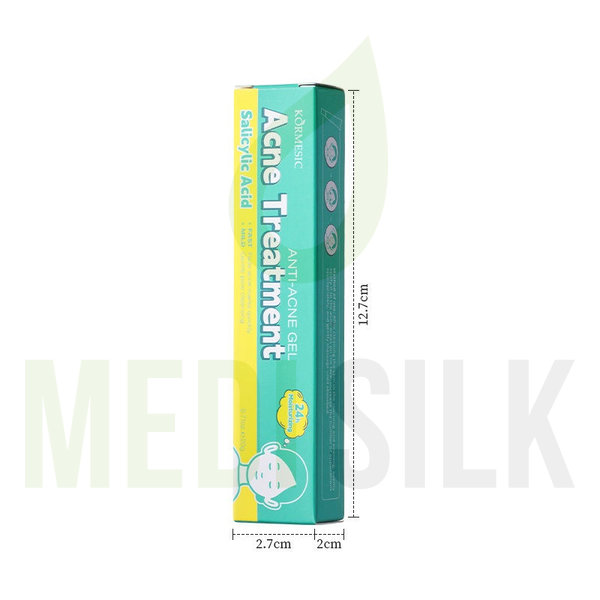
| Packaging | Squeeze tube or airless pump bottle (opaque or UV-protective to preserve ingredient stability) |
| Shelf Life | Typically 24–36 months from manufacture date; use within 12 months after opening |
| Regulatory Status | OTC drug for acne treatment per FDA monograph (salicylic acid as active ingredient); meets cosmetic regulations for supporting ingredients |
| Results Timeline | Initial drying of active pimples (1–3 days), purging phase possible (2–4 weeks), visible improvement (weeks 4–8), maximum results (weeks 8–12+), maintenance with ongoing use |
| Suitable For | Daily use, year-round use, all ages (adults; children over 2 years with caution), all genders, combination therapy with other acne treatments (with appropriate timing separation) |
 Shop Feed